


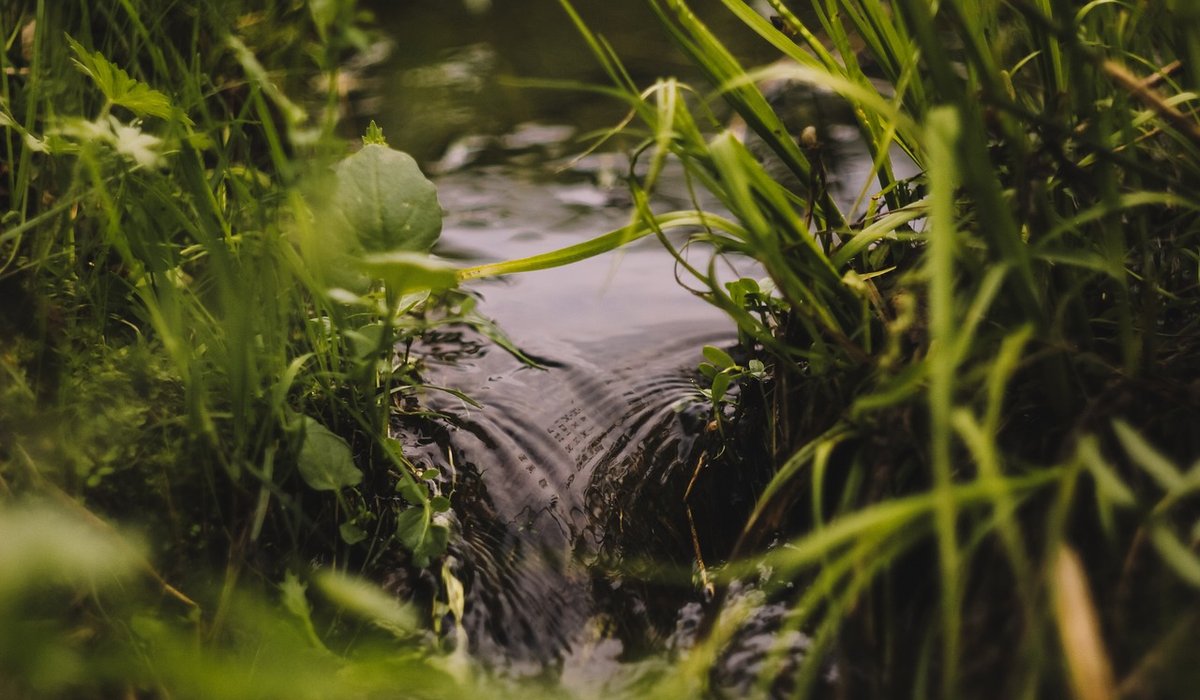
The Brook Wakes Up
A brook in late February is not a glamorous place. The water is high and peaty-brown, the banks are sodden, and the alders are bare. And yet something has shifted. The light lingers an extra half hour, the first warm rain has fallen, and the brook is carrying a different sound — a fuller, more urgent rumble under the little plank bridge where you stand. Spring reaches a stream earlier than it reaches the surrounding fields, because water holds the cold but also responds fast to lengthening days.
This is the season to visit often, and briefly. Things change week by week, sometimes day by day, and the whole performance — frogs, spawn, first flowers, first insects — unfolds in about ten weeks. Miss a fortnight and you miss the best of it.
Frog Spawn and the First Chorus
Common frogs begin moving towards water on mild wet nights from late January in the south-west, and through February and early March elsewhere. They are not fussy about destination: a garden pond, a ditch, a flooded gateway and a slow brook margin will all do. Breeding usually begins once the water sits at around 5–7°C.
Look for spawn in the shallowest, sunniest, most sheltered margins, where it is anchored to twigs, rushes or last year's drowned grass. Frog spawn comes in rounded clumps the size of a small fist, each egg a black dot inside a ball of clear jelly. Toad spawn — laid a few weeks later, and usually in deeper water — arrives instead as strings wound through the weed, like a bead necklace.
A few practical points help:
- Watch from one spot. Sit still for ten minutes and the frogs resettle; keep walking and you will only ever see ripples.
- Never lift spawn out of the water. The jelly is fragile and handling does real harm.
- Go early. The chorus is loudest at dawn and dusk, and the banks are quietest then too.
- Note the date. Frogs tend to return to the same few metres of water each year, so your records become genuinely useful.
The male's call is a soft, rolling croak, more purr than song. Toads trill, and sound oddly like a distant telephone. In a cold snap the frogs simply wait, sometimes for a fortnight, sitting in the shallows under leaves.
Early Flowers of the Wet Meadow
The brook's floodplain is often the first place in the parish to green up and flower, and the species are distinctive. Coltsfoot pushes up its dandelion-yellow heads straight out of bare mud in February and March, with the leaves only appearing afterwards. Lesser celandine follows on damp hedge banks, its glossy heart-shaped leaves and starry yellow flowers catching the light.
On the shadier, wetter stretches of bank, look for opposite-leaved golden saxifrage — a low, spreading mat of greenish-yellow that most people walk straight past. In April the kingcups arrive, buttercup-gold in the boggy hollows, and by then cuckooflower is opening along the ditch edges. A hand lens turns any of these into a small landscape.
Insects on the Wing Again
The first queen bumblebees of the year are worth watching for. Buff-tailed and early bumblebee queens emerge on mild days and go straight for sallow catkins, which are one of the few reliable early nectar sources by water. Willow, in all its forms, is the single most valuable plant along a brook in early spring.
In the water itself, life is busier than it looks. Caddisfly larvae poke across the gravel in cases built from sand grains, twigs or bits of leaf. Stonefly nymphs cling beneath stones, and on warm afternoons adults of both groups sit about on bridge parapets and fence posts. Turn over a single stone, look, and put it back exactly as it was.
Later in the month come brimstone and peacock butterflies in sheltered sunny corners, hoverflies over the celandine, and — if the brook is clean enough — the first banded demoiselles in May.
Slow Mornings by the Water
The pleasure of a brook in spring lies in how little you need. Wellies, a notebook, a flask, and the willingness to stand still for a quarter of an hour. Choose one small area — a bend, a riffle, the silt behind a fallen branch — and return to it weekly. You will learn more from that square metre than from a dozen new places.
Keep to the path where you can, keep dogs out of the spawning shallows, and give the bank vegetation a wide berth in March and April. If you move between different brooks, give your boots a rinse in clean water before you go. Then find a gate to lean on, listen to the water, and let the morning take its time.


Leave a reply