


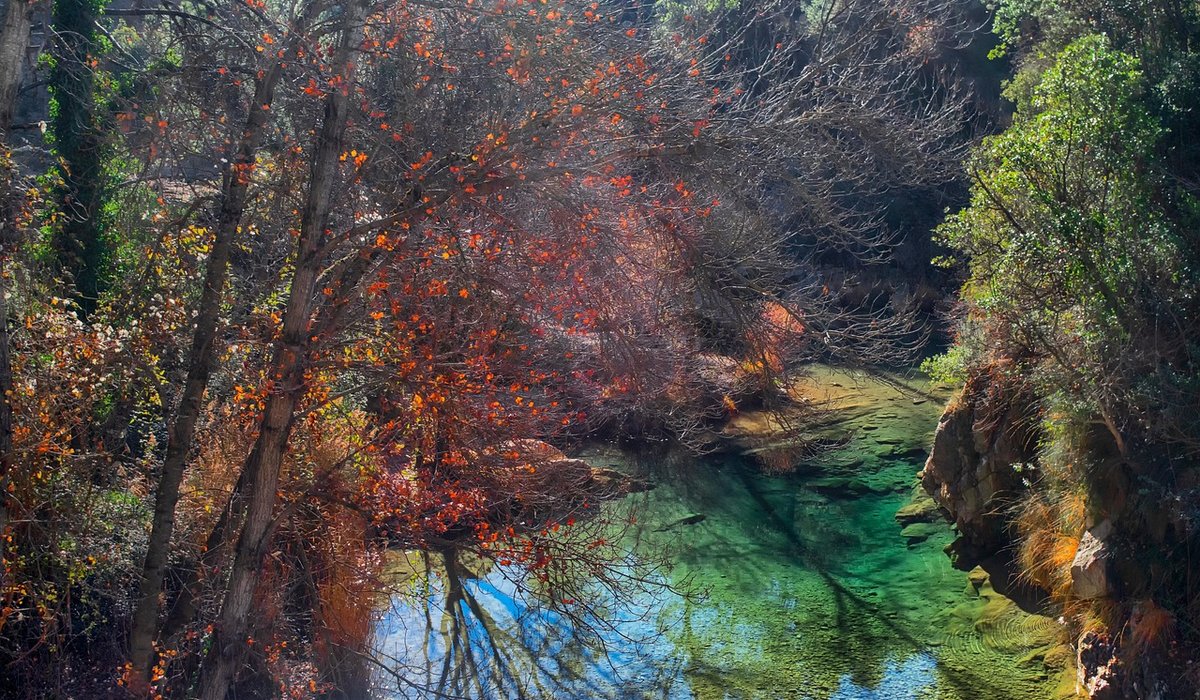
The quiet hour before the pond wakes
There is a particular stillness at a pond edge just after sunrise. The water has not yet picked up the wind, the reeds are beaded with dew, and the first dragonflies are still clinging to last night's perch, waiting for the warmth to reach their flight muscles. For a photographer, this is the kindest hour of the day. Damselflies in particular will sit tight until the air reaches roughly 15°C, which means you can work within inches of them without causing alarm. Aim to be in position by six in the morning in midsummer, and give yourself until about nine before the light turns hard and the pond turns restless.
Getting close without disturbance
Most failed dragonfly photographs are caused by impatience, not equipment. Walk slowly along the bank rather than through the marginal plants, and stop every few paces to let the pond settle around you. Stay low: kneeling, sitting on a mat or lying flat all reduce your silhouette and make you far less alarming than a figure looming over the reeds.
Keep your shadow off the insect. A perch in shade feels cold, and a cold dragonfly will move to a sunnier stem the moment you turn your back. Approach with the sun to your side so the insect stays lit and your shadow falls away across the water. If a head turns to track you, freeze completely; wait for it to relax, then take one slow step. Never wade into soft margins, and never handle or chill an insect for a photograph. The habitat you crush will not recover before next season.
Camera settings for perched subjects
The pond edge rewards a simple, repeatable setup. Set it before you leave the house so that you are not fiddling with menus while a freshly emerged emperor dries its wings.
- Aperture: f/8 to f/11 for a whole damselfly in focus; f/4 to f/5.6 for an eye-level portrait where the background melts away.
- Shutter speed: 1/250 to 1/500 second for a still insect; go higher if there is a breeze moving the stem.
- ISO: start at 400 and rise to 1600 as shade deepens. Slight noise is far better than a blurred eye.
- Focus: single-point autofocus, continuous mode, placed precisely on the eye. The eye and thorax must be sharp; the abdomen tip may safely fall away.
- Drive mode: a short burst of three or four frames, then stop and reassess. Machine-gunning a perched damselfly wastes card space and rarely improves the picture.
- Lens and support: a 90–105mm macro is ideal; a 300mm with extension tubes works well if the insect is over water. A monopod with the head loose enough to tilt is often more useful than a tripod at the water's edge.
Flight, and the moment of take-off
Hawking dragonflies need 1/1600 second at minimum, ideally 1/2500, with continuous autofocus tracking and a slightly wider view so you can keep the insect in frame. Do not chase. Pick a perch where a territorial male keeps returning — four-spotted chasers and emperors patrol predictable beats — pre-focus on it, and wait for the patrol to come back to you. A low-power diffused flash at around minus one and a half stops will freeze wing tips without making the scene look unnatural.
Reading perches, light and background
Every species has its habits. Banded demoiselles favour the tips of nettles and brambles beside running water; azure and blue-tailed damselflies choose iris leaves and floating pondweed; broad-bodied chasers return again and again to the same warm bare stem or weathered post. Find one good perch and stay with it, because dragonflies are creatures of routine.
Work at eye level with the insect. A low angle gives you sky, soft distant reeds or smooth water behind the subject rather than a bank of mud. Look for a clean line: one stem, an unbroken reflection, nothing bright behind the head. Side light at twenty to forty degrees brings out the texture of wings and the facets of the eyes, while backlight through a dew-covered abdomen creates a delicate rim — lift exposure by roughly a stop and shield the front element from flare.
Slow looking, and leaving the pond as you found it
Once the sun is high and the pond is busy, put the camera down and simply watch. The best sessions here are rarely the longest ones. Stay on the path where you can, keep to a single vantage point rather than trampling a dozen, and leave the margin plants standing for next year's larvae. Photographing dragonflies is really an exercise in slowing down: arrive early, move little, breathe, and let the pond come to you.


Leave a reply